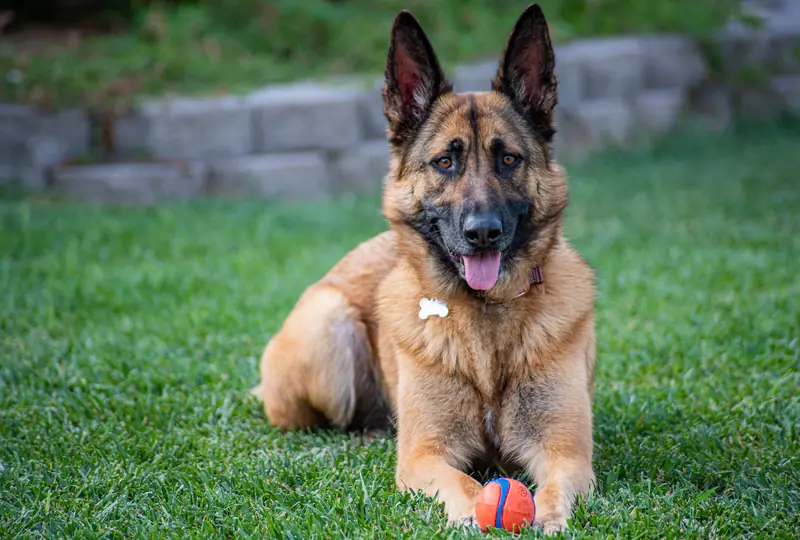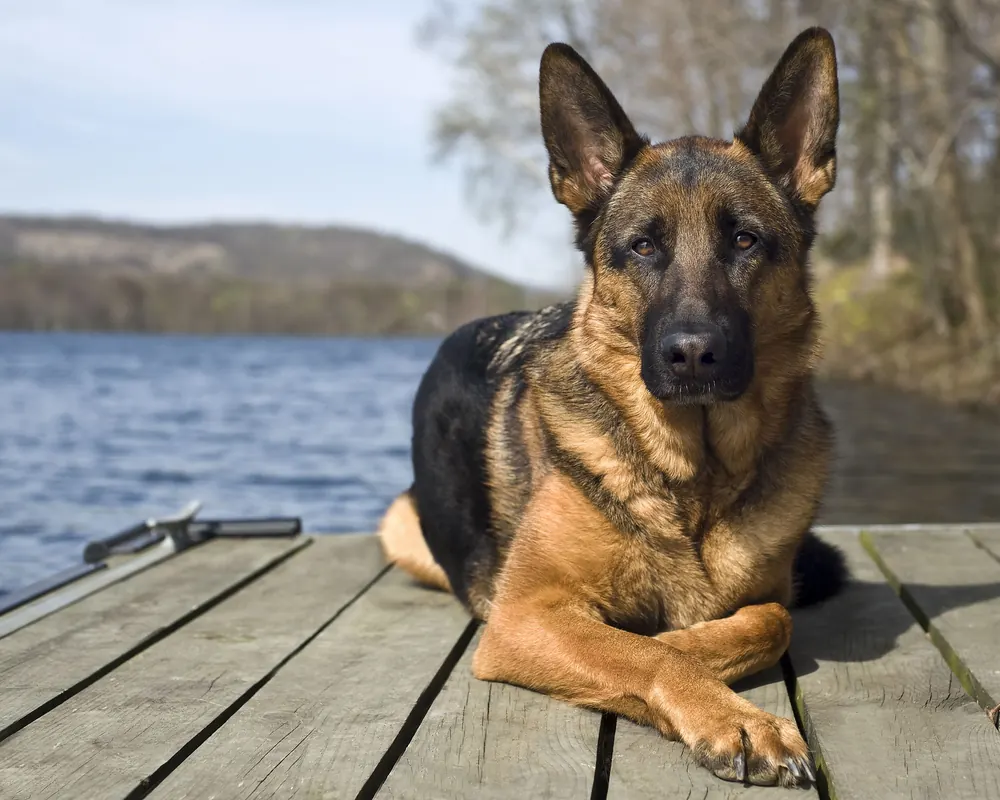
German dog names carry centuries of cultural heritage and linguistic strength. Whether you're drawn to the language's distinctive phonetics, have German ancestry, or simply love the powerful sound of German words, these names reflect the country's rich history and character. From traditional names rooted in Germanic mythology to modern variations, German names often convey personality traits—many emphasizing loyalty, intelligence, and courage. These options work beautifully for any breed and gender, offering something far more distinctive than typical English pet names while remaining easy to pronounce and command. Our top picks: Lukas, Max, Bruno, Wilhelm, Klaus. Full list below, searchable and sortable.
The picks of the litter
Our Gaeilge teacher, a rescue trainer, and thirteen very good dogs weighed in. These five kept coming up.
-
01
LukasGerman form of Luke, meaning 'from Lucania' or 'bringer of light.'
-
02
MaxShort for Maximilian, meaning 'greatest' in Latin, widely used in German culture.
-
03
BrunoFrom the Germanic 'brun,' meaning 'brown,' often referring to the animal's color.
-
04
WilhelmGerman variant of William, meaning 'resolute protector' or 'strong-willed warrior.'
-
05
KlausShort form of Nikolaus, meaning 'victory of the people' in Greek origin but deeply Germanic.
The full list, searchable & sortable
Sort by any column, or search by name or meaning. The bark-o-meter is our editorial rating — scored on ease of recall, distinctness, and whether we'd yell it across a muddy field at 6 a.m.
| Name ▾ | Tag | Meaning | Bark-o-meter |
|---|---|---|---|
| Lukas | very popular | German form of Luke, meaning 'from Lucania' or 'bringer of light.' | |
| Max | very popular | Short for Maximilian, meaning 'greatest' in Latin, widely used in German culture. | |
| Bruno | classic | From the Germanic 'brun,' meaning 'brown,' often referring to the animal's color. | |
| Wilhelm | classic | German variant of William, meaning 'resolute protector' or 'strong-willed warrior.' | |
| Klaus | popular | Short form of Nikolaus, meaning 'victory of the people' in Greek origin but deeply Germanic. | |
| Otto | trending | From Germanic 'aud,' meaning 'wealth' or 'prosperity.' | |
| Fritz | classic | Nickname for Friedrich, meaning 'peaceful ruler' in Germanic tradition. | |
| Hans | classic | German form of John, meaning 'God is gracious,' with historical Germanic significance. | |
| Helmut | popular | From 'helm' (helmet) and 'muot' (courage), literally 'courageous in battle.' | |
| Dietrich | classic | From 'diut' (people) and 'rik' (ruler), meaning 'people's ruler' or 'leader.' | |
| Gerhard | classic | From 'ger' (spear) and 'hard' (strong), meaning 'strong with the spear.' | |
| Berthold | rare | From 'beraht' (bright) and 'wald' (rule), meaning 'bright ruler.' | |
| Ludwig | classic | From 'hlod' (famous) and 'wig' (warrior), meaning 'famous warrior.' | |
| Siegfried | rare | From 'sigi' (victory) and 'fridu' (peace), meaning 'victorious peace.' | |
| Gunther | popular | From 'gund' (battle) and 'heri' (warrior), meaning 'battle warrior.' | |
| Konrad | classic | From 'kuoni' (bold) and 'rad' (counsel), meaning 'bold counselor.' | |
| Albrecht | rare | From 'adal' (noble) and 'beraht' (bright), meaning 'noble and bright.' | |
| Rolf | popular | Short for Rudolf, from 'hrod' (fame) and 'wolf,' meaning 'famous wolf.' | |
| Ulrich | rare | From 'uodal' (heritage) and 'rik' (ruler), meaning 'heritage ruler.' | |
| Oswald | classic | From 'os' (god) and 'wald' (rule), meaning 'divine ruler.' | |
| Axel | very popular | Scandinavian form of Absalom, popular in German-speaking regions. | |
| Kurt | popular | Short form of Konrad, meaning 'bold counselor' with a modern, punchy feel. | |
| Walter | classic | From 'wald' (forest) and 'heri' (warrior), meaning 'forest warrior.' | |
| Kasper | popular | German variant of Casper, from Persian 'Gaspar,' meaning 'master of treasure.' | |
| Ernst | classic | From Germanic root meaning 'serious' or 'resolute.' | |
| Dieter | popular | From 'diut' (people) and 'heri' (warrior), meaning 'people's warrior.' | |
| Hugo | trending | From 'hug' (mind/intellect), meaning 'intelligent one.' | |
| Horst | rare | From Germanic meaning 'thicket' or 'wooded area,' suggesting wild nature. | |
| Rainer | popular | From 'ragin' (warrior) and 'heri' (army), meaning 'warrior's army.' | |
| Siegmund | rare | From 'sigi' (victory) and 'mund' (protection), meaning 'victorious protector.' | |
| Norbert | classic | From 'nord' (north) and 'beraht' (bright), meaning 'bright from the north.' | |
| Ferdinand | classic | From 'ferdi' (journey) and 'nand' (brave), meaning 'brave traveler.' | |
| Egon | rare | From Germanic roots meaning 'edge' or 'sharp,' suggesting keenness. | |
| Ansgar | rare | From 'ans' (god) and 'gar' (spear), meaning 'god's spear.' | |
| Markus | popular | German form of Mark, from Latin meaning 'warlike' or 'dedicated to Mars.' | |
| Bernd | popular | Short for Bernard, from 'bern' (bear) and 'hard' (strong), meaning 'strong as a bear.' | |
| Andreas | very popular | German form of Andrew, from Greek meaning 'strong' and 'manly.' | |
| Stefan | very popular | German variant of Stephen, from Greek meaning 'crown' or 'garland.' | |
| Reinhold | classic | From 'ragin' (warrior) and 'wald' (rule), meaning 'warrior's ruler.' | |
| Rudolph | classic | From 'hrod' (fame) and 'wolf' (wolf), meaning 'famous wolf.' | |
| Jürgen | popular | German form of George, from Greek meaning 'farmer' or 'earth-worker.' | |
| Volker | popular | From 'folk' (people) and 'heri' (warrior), meaning 'people's warrior.' | |
| Joachim | classic | German form of Joachim, Hebrew origin meaning 'God will establish.' | |
| Tilo | rare | Short form of Theoderich, meaning 'people's ruler' with Germanic roots. | |
| Leberecht | rare | From 'leba' (life) and 'beraht' (bright), meaning 'bright life.' | |
| Manfred | classic | From 'man' (man) and 'fred' (peace), meaning 'peaceful man.' | |
| Hubert | classic | From 'hug' (mind) and 'beraht' (bright), meaning 'bright-minded.' | |
| Sigmund | rare | From 'sigi' (victory) and 'mund' (protection), meaning 'victor's protection.' | |
| Theodor | classic | From Greek 'theos' (god) and 'doron' (gift), meaning 'gift of God,' popular in German tradition. | |
| Severin | rare | From Latin 'severus' (strict/serious), adopted into Germanic tradition. | |
| Finnegan | trending | While Irish-origin, became popular in German-speaking countries with Germanic phonetic appeal. |
Frequently asked questions
Why choose a German dog name?
Are German dog names easy to pronounce in English?
Do German names work better for specific dog breeds?
What's the difference between traditional and modern German dog names?
Are there German names specifically for female dogs?